An ACHMA VISB charge is, in the large majority of reported cases, a Verizon Wireless bill payment processed through the ACH (Automated Clearing House) network. The exact meaning of the letters “ACHMA VISB” isn’t officially published anywhere by Verizon or the banking industry; it’s a merchant descriptor, and descriptors get compressed and abbreviated by payment processors. If the amount and date match your Verizon bill, it’s almost certainly your phone payment. If it doesn’t match anything you recognize, treat it like any unfamiliar charge: verify first, then act.
What Is an ACHMA VISB Charge?
You’re looking at your bank or card statement, and there it is: “ACHMA VISB” or “ACHMA VISB BILL PYMNT.” No company name, no context, just a string of letters that looks like it belongs in a password, not a receipt.
Here’s the honest starting point: ACHMA VISB is a merchant descriptor a short code banks and payment processors use to label a transaction when the full company name won’t fit in the limited character space on a statement line. It’s the same reason you sometimes see “AMZN Mktp” instead of “Amazon Marketplace,” or “SQ *” before a small business name.
Based on consistent, high-volume consumer reports and payment patterns, ACHMA VISB is most often tied to a Verizon Wireless bill payment made via ACH (a bank-to-bank electronic transfer) or through a Visa-linked payment channel, typically from My Verizon, Verizon ExpressPay, or an autopay setup.
Breaking Down the Descriptor What’s Confirmed vs. What’s Speculation
This is where most articles on this topic get it wrong, and it’s worth being direct about it: there is no official, published source not from Verizon, not from a bank, not from the ACH network that confirms exactly what “ACHMA” or “VISB” stand for.
You’ll find several confident-sounding explanations online:
- “ACH Mobile App”
- “Automated Clearing House Merchant Authorization Visa Bill Payment”
- Various partial or unconfirmed breakdowns
These are plausible reconstructions, not verified facts, and different sites disagree with each other, a sign that these acronym expansions are guesses, not documentation. What is reliably confirmed by pattern and consumer reporting:
- ACH almost certainly refers to the Automated Clearing House network, the standard U.S. system for electronic bank-to-bank transfers.
- VISB is very likely connected to Visa’s bill-payment processing channel, since the charge often appears when a linked Visa debit card or bank account is used.
- The transaction is tied to Verizon Wireless in the overwhelming majority of reported cases.
Treat any specific letter-by-letter “official” translation you see elsewhere with healthy skepticism including anything not backed by a citation.
Is ACHMA VISB Always Verizon?
Usually, but not universally. A few things can affect this:
- Banks reuse similar descriptor formats across different processors, so a visually similar string could theoretically be linked to a different merchant using the same Visa bill-pay pathway.
- Business or multi-line Verizon accounts may show slightly different formatting depending on who initiated the payment (an Account Owner vs. an Account Manager).
- Timing matters: a charge appearing days after your actual bill date is more likely a delayed ACH settlement than a separate issue.
The safest assumption isn’t “it’s definitely Verizon” or “it’s definitely fraud” it’s “verify, then decide.”
How to Verify an ACHMA VISB Charge
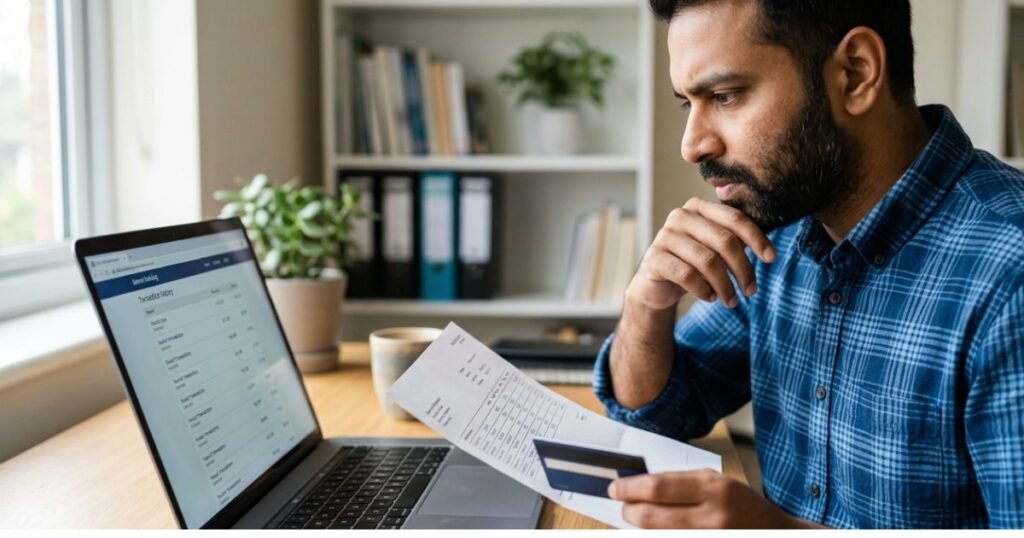
Work through these steps in order. Each one narrows down the answer.
- Check the dollar amount. Open the My Verizon app or log in at verizon.com and compare the charge to your current or most recent bill total.
- Check the date. Match it against your autopay date or the date you manually paid through ExpressPay.
- Review your Verizon payment history. My Verizon keeps a record of every payment and looks for one that lines up with the ACHMA VISB entry.
- Confirm who has account access. On shared or business accounts, check whether another Account Owner or Account Manager made a payment you weren’t aware of.
- Call Verizon directly if you’re still unsure. Verizon customer service can confirm whether a payment was logged on your account for that date and amount.
- Call your bank if Verizon can’t confirm it. Your bank can tell you the exact originating merchant tied to the transaction; they see more detail than what prints on your statement.
If every step lines up, you’ve got your answer. If nothing matches, move to the next section.
ACHMA VISB vs. a Fraudulent Charge What’s the Difference?
| Signal | Likely Legitimate Verizon Charge | Possible Unauthorized Charge |
| Amount | Matches your typical bill within a few dollars | Doesn’t match any known bill, or is a round/unusual number |
| Timing | Falls on or near your regular billing date | Appears at an unexpected time, or duplicates a payment already made |
| Account activity | Confirmed in My Verizon payment history | No matching entry anywhere in your Verizon account |
| Frequency | Recurring monthly, consistent with autopay | One-off, unexplained, or repeating unexpectedly |
| Your knowledge | You have an active Verizon account and recall paying | You don’t have a Verizon account, or the account was closed |
If you land in the right-hand column, don’t wait; unfamiliar charges are far easier to resolve early than after weeks have passed.
What to Do If the Charge Doesn’t Match Your Bill
If you’ve verified with both Verizon and your bank and still can’t account for the charge, you have real legal protections. This isn’t just a courtesy from your bank.
For charges pulled directly from a bank account or debit card (which ACH transfers typically are), your rights are covered under the Electronic Fund Transfer Act (Regulation E). Under this framework, you have the right to dispute an error, and your bank must investigate it within set timeframes once you report it. <cite index=”12-1″>The investigation must include a reasonable review of relevant information within the financial institution’s own records</cite>, and <cite index=”12-1″>the bank must complete its investigation within Regulation E’s time limits, then correct any confirmed error within one business day of determining it occurred</cite>.
Practical steps:
- Contact your bank’s fraud or disputes line as soon as you notice the issue not after several billing cycles.
- Follow up in writing, even if you’ve already called, and keep a copy of everything you send.
- Ask for the investigation timeline in writing so you know when to expect a resolution.
- Don’t close your account preemptively let your bank guide you on whether that’s necessary.
For general guidance on your rights, the Consumer Financial Protection Bureau is the primary federal source not a summary blog.
Read More: The Future of In-Person and Online Payments
Original Insight Why Merchant Descriptors Get Garbled in the First Place
Here’s something most articles on this topic skip entirely: the character-limit problem behind cryptic descriptors like ACHMA VISB isn’t unique to Verizon; it’s a structural quirk of how ACH and card networks were built decades ago, long before anyone anticipated today’s transaction volume. Many bank statement systems still cap merchant name fields at a fraction of what a modern company name needs, so processors truncate, abbreviate, or insert internal routing codes instead. That’s why you’ll see similarly cryptic strings from other billers utilities, insurance companies, streaming services, not just Verizon. Understanding that pattern is more useful long-term than memorizing one company’s specific code, because it explains why this kind of confusion keeps happening across totally unrelated bills.
Business & Multi-Line Accounts
If you manage a Verizon account for a family plan or small business, ACHMA VISB charges can be harder to trace because multiple people may have payment access. Before assuming anything is wrong:
- Check whether any Account Manager (not just the primary Account Owner) made a payment.
- Review whether auto-pay is enabled on more than one payment method, which can occasionally cause duplicate-looking entries.
- For larger business wireless accounts, ask Verizon’s business support line for an itemized payment log, since the consumer-facing app may not show every payment source.
Read More: Why Digital Finance Apps Are Changing Money Management
Conclusion
An ACHMA VISB Bill Payment Verizon entry on your bank statement is usually an ACH payment reference related to a Verizon bill payment, not necessarily a fraudulent charge. However, you should always verify the payment amount, date, and account details against your Verizon billing history. If you don’t recognise the transaction or suspect unauthorised activity, contact Verizon and your bank immediately to investigate and protect your account.
FAQs
What does ACHMA VISB mean on my bank statement?
It’s a merchant descriptor most commonly tied to a Verizon Wireless bill payment sent through the ACH network. The exact letter-by-letter meaning isn’t officially published by Verizon or the banking industry.
Is ACHMA VISB a scam?
Not typically. Most reported ACHMA VISB charges match a legitimate Verizon Wireless payment. That said, verify the amount and date against your account before assuming it’s safe, don’t skip that step just because it’s usually fine.
Why does Verizon show up as ACHMA VISB instead of its name?
Bank and card statement systems limit how many characters a merchant descriptor can display, so processors abbreviate or use internal codes instead of the full company name.
How do I stop ACHMA VISB charges?
If they’re your Verizon bill, you’d need to cancel autopay through My Verizon rather than stop the charge at the bank level. If they’re not your charges, dispute them with your bank instead.
Can I dispute an ACHMA VISB charge?
Yes, if you’ve confirmed with Verizon that it isn’t your payment. Contact your bank’s dispute or fraud department for ACH/debit transactions, your rights are protected under Regulation E, and your bank is required to investigate.
What if I don’t have a Verizon account at all?
Contact your bank immediately. A charge tied to a service you’ve never used is a stronger signal of an unauthorized transaction, and early reporting limits your liability.
