Small businesses have a lot of risk to contend with. It might not have been the first thing your business mentor walked you through, but the moment you create a business, you become a target.
After all, your business exists to make money. To do that, you need customers. And if your customers are going to spend money, they need to give you their card details.
Once those are in the system – and even when encrypted – there’s a chance a hacker could grab them as they try to pass securely from one point to the next.
But that’s not the only thing that could attract risk. If you have physical premises, someone could break in. That’s a costly fix-up job to pay for, but it could also result in some incredibly damaging product loss.
On top of that, an employee could even steal from your stock room, and you might not find out until it’s too late.
All in all, your small business is at risk. And it could even be in more dangerous waters than you first thought. Here are the reasons why, as well as what you can do about them.
You Operate Lax Password Practices
Everyone does here and there. We all have at least one password that was made up in the space of a moment and uses at least two very easily discoverable details about ourselves.
If you’ve ever had a password that was just your initials and your birthday, for example, it’s probably been cracked multiple times over.
But when it comes to your business, your password practices cannot afford to be so lax. You need to operate a strong password policy within your organization, and the rules should be followed at all times.
How to Create a Password Policy
It’s all in the details. For one, employees should know you have a password policy to begin with. Make sure it’s a document you can easily share with them when they come on board.
Within the policy, set out guidelines like:
- Recommended password length
- Mixed characters should be used
- No repeat passwords across accounts
- Where the password can be safely stored
- How often do passwords need to be changed
There’s Little Access Point Monitoring
Your business has a front door. It may also have a back or side door, or both. Are you able to keep an eye on all of these entry points?
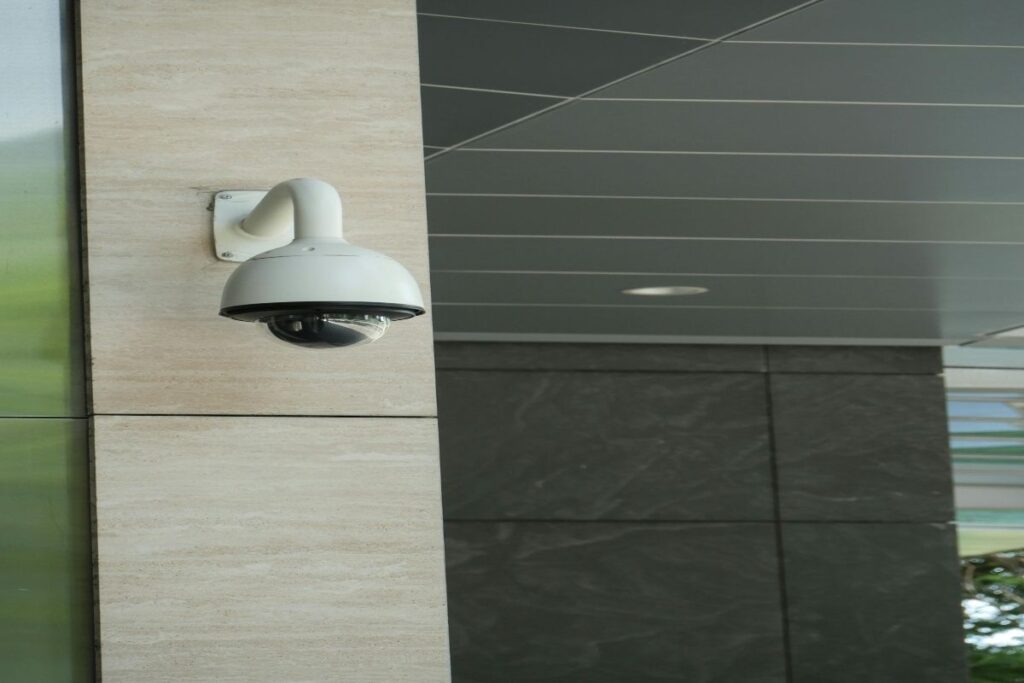
You may have a camera set up, of course. But small businesses tend to have limited CCTV to begin with. One camera covers the entity of your reception and lobby area, if you have one. Otherwise, it’s just a couple of cameras pointed at your door and the main office area.
In terms of physical security, this might not be enough to protect you. A camera can be a deterrent, yes. But if you’re not monitoring any and all access points – nor making it easy to monitor them in detail – you’re leaving yourself in the dark.
Why Access Control is Beneficial
An access control system incorporates your CCTV into a much wider security system.
For one, you’re able to monitor your workplace from a remote distance. For another, your video feeds all link back to the same place, so you don’t have to search for recordings when an incident occurs.
And with access control, your doors aren’t just watched; they’re locked to anyone who doesn’t have the exact key to get in. That helps to keep your premises locked down against both intruders and unauthorised staff.
You Haven’t Updated Your Risk Assessment
Risk assessments aren’t stationary objects. They’re not something you can do once and then just forget about. They’re the kind of plan that needs to change as often as the environment and working practices do.
If they don’t, you might not account for as many workplace risks as there really are. And let us tell you now, there’s always more of these than most business owners like to believe.
How Often Should You Review a Risk Assessment?
So, your risk assessment could be in need of an update. However, when it comes to maintaining good, valid risk assessments, how often should you actually put them under review?
It depends on your business, your working environment, the people in the environment, and the work you do. Risk assessments need to be specific, as does the review schedule they go through.
As a rule, your risk assessment should be updated every time you invest in new equipment, hire a new employee, or the work environment changes (i.e., if an employee starts working from home).
On top of that, a more general review should be done once a year, to make sure there’s nothing that needs to be added, removed, or amended.
You Don’t Have Any Phishing Protections in Place
Someone may click on a phishing link at some point. There’s no stopping that; phishing links are designed to entice you in.
And even when you’re good at spotting a suspicious link, there may be someone out there who knows exactly the right link to send that’ll get you clicking.
The key thing to do is to have a phishing response plan to carry out if anyone thinks they have been caught.
This should outline what to do, who to tell, and the necessary containment measures.
Keep Your Small Business Safe
Your small business is at risk, and it’s always better to be aware of that. Make sure you’re covering your organization in the areas above. They’re easy to miss off your security list, but they should have just as much priority as everything else.
From your risk assessment to your business’s physical access, down to the unique passwords and email inboxes your employees use, everything needs a security measure.
Remember, they’re much more likely to become problems at some random point in a year’s time than they are right now. You need to be as proactive as possible in preventing the subsequent fallout from causing too much damage.
